
The Bay of the Somme, or Baie de Somme in French, is an easy weekend break from the UK. Located in Picardy, the Somme is popular with nature lovers and families, it’s a great slow tourism destination. Seals wallow on sandbanks, seabirds dive into the water and there’s a wide open grassy marshland to be explored by vintage rail, cycle paths or on foot.
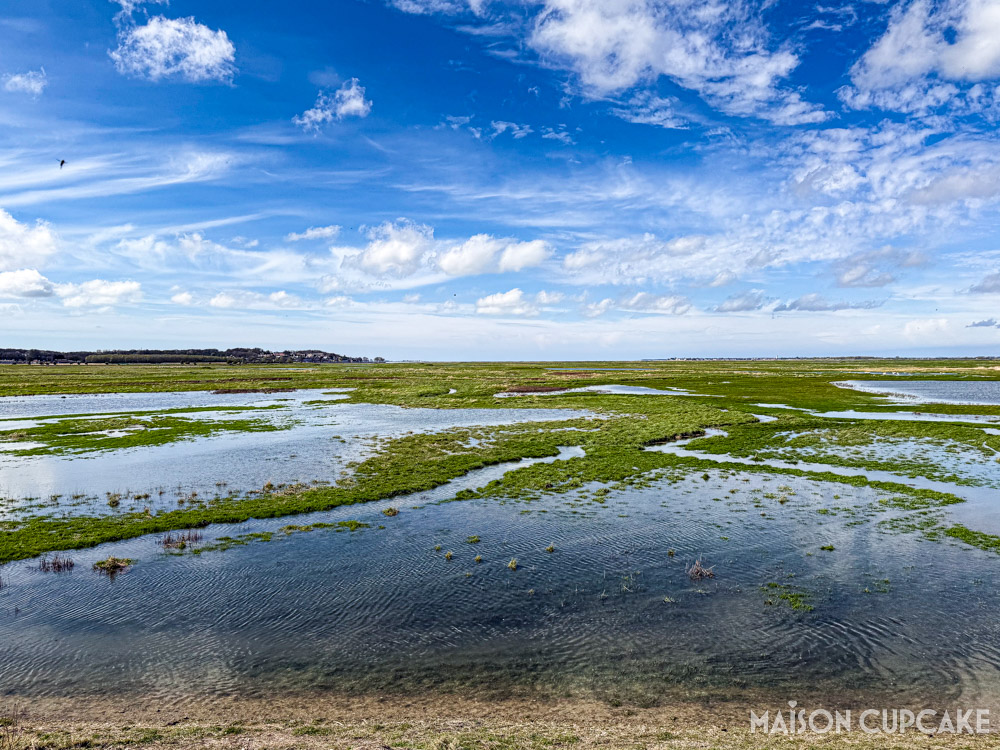
We spent three days in the Somme region, staying in Le Crotoy and visiting Saint-Valery-sur-Somme and Le Tréport. The climate is similar to the UK, but when the sun comes out, the light is magical: Le Crotoy benefits from an unusual southerly-facing aspect despite being on the northern French coast.
A Weekend In The Somme, Picardy
Driving To The Somme Through The Channel Tunnel
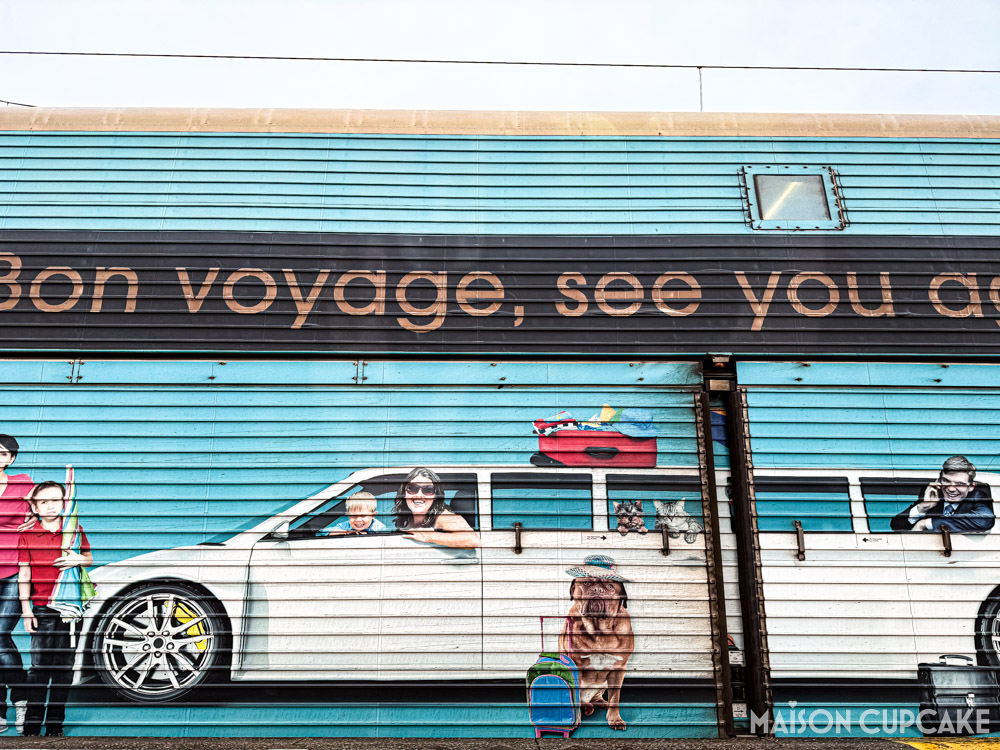
If you’re using the Channel Tunnel on peak holiday dates, it is worth departing one night ahead of the rush. On Good Friday our check-in and departure delays snowballed into four hours instead of the usual 60-90 minutes we’d typically experience. Happily on Tuesday, our return leg with Le Shuttle was seamless; just 4.5 hours door to door driving back to east London.
The journey between Calais and the Somme region is straightforward and takes 90 minutes; straight down the motorway through the Hauts-de-France region and turning off ten miles before Le Crotoy.
Arrival at Le Crotoy
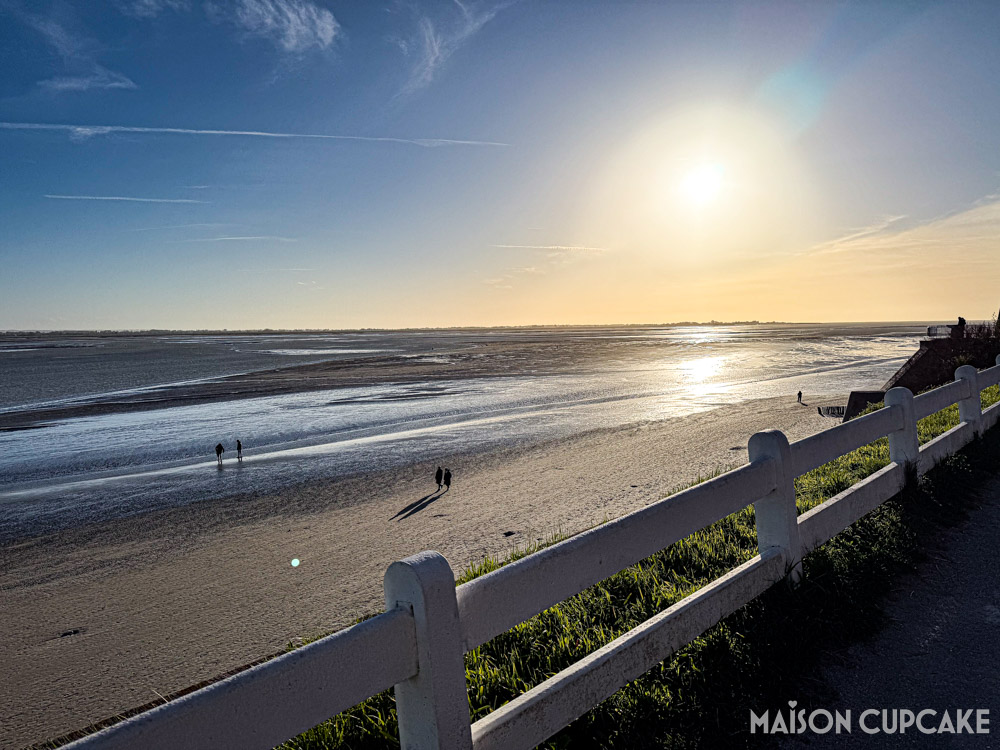
We reached Le Crotoy by 8pm. Quickly dropping luggage, we popped out for dinner on foot. The north French coast hooks round into the Somme bay so you get south-facing watery views although there is land opposite.
Day 1: Settling into Le Crotoy and steam railway to Saint-Valery-sur-Somme
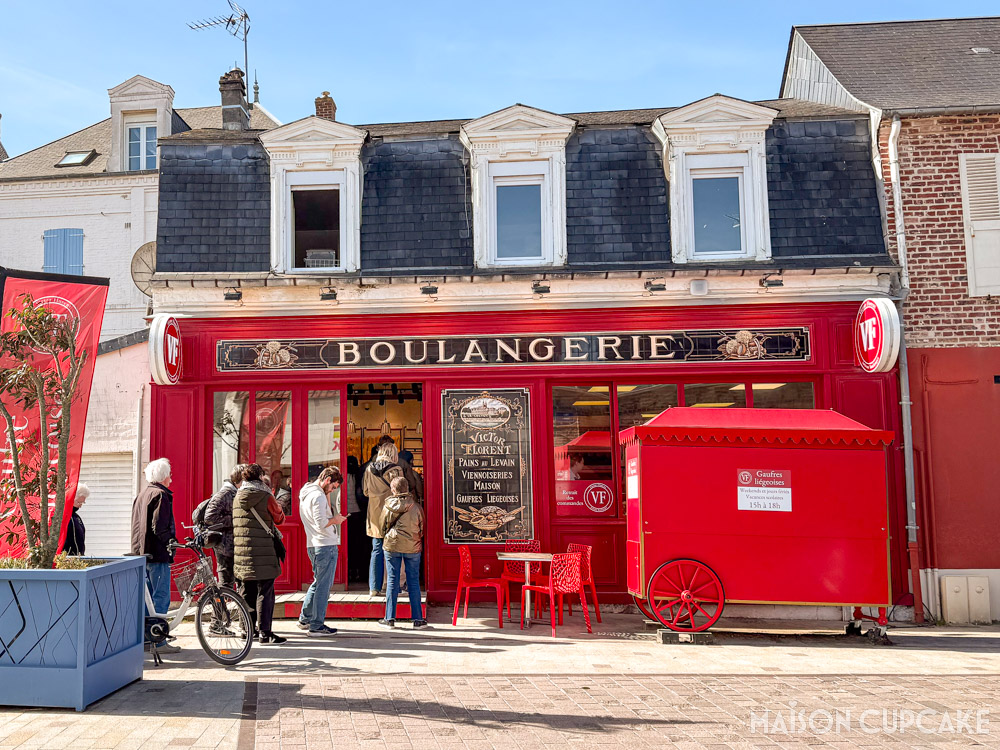
We had a lazy start to compensate for the time difference. The best boulangerie in town, Victor Florent, was the perfect place to pick up breakfast and almost close enough to smell the bread baking. Their baguettes, referred to as Victoriennes, are sold in three degrees of crispness and fetching red paper bags. We bought granary ones “aux graines” every day to make jambon-camembert sandwiches.
The main supermarket, Carrefour Contact, had everything else we needed within a ten minute walk. Although only shopping for four days’ worth of breakfast and snacks, I wished we’d taken the car to the supermarket, as basic groceries including milk, fruit juice – and some French wine of course – were a little heavy to carry back.
Markets in Le Crotoy
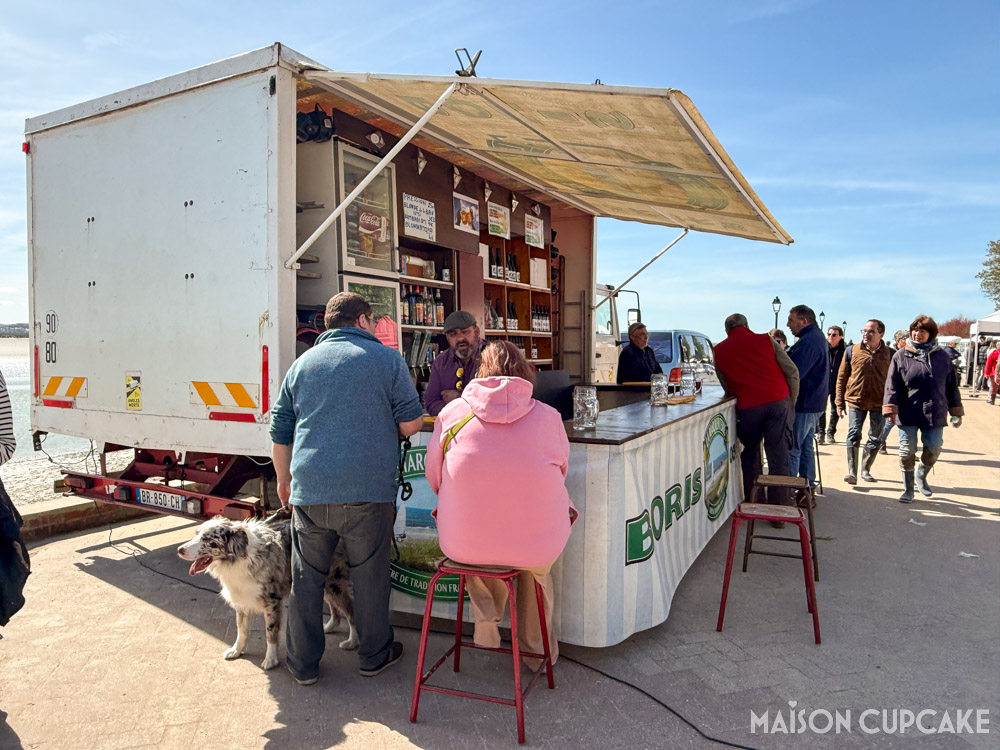
Normally, an afternoon market of artisanal producers overlooking Le Crotoy’s harbour runs just Wednesday afternoons, but to our delight, it was there all day, every day of Easter weekend. As well as cheese and charcuterie stalls, this market was notable for having three different bar stalls selling wine, beer and champagne. You could enjoy a tipple on the spot: champagne was only 4 euros a glass!
Le Crotoy’s bigger main market runs every Friday on Digue Mercier and moves twice weekly to Quai Courbet in summer – we didn’t see this on this trip.
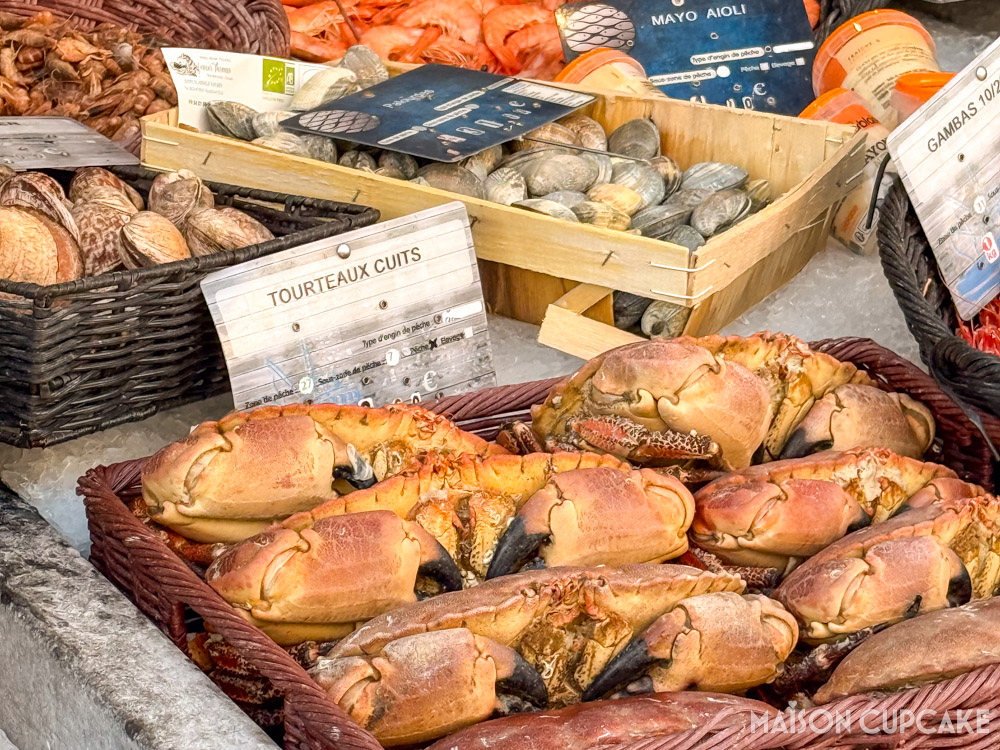
There are also regular fish markets; the main building has several booths on Digue Mercier, but there are also daily fishmonger stalls such as Poissonnerie L’Oceane on Place Jeanne d’Arc. You can buy cooked crabs or fresh mussels by the kilo.
The Somme Heritage Steam Railway
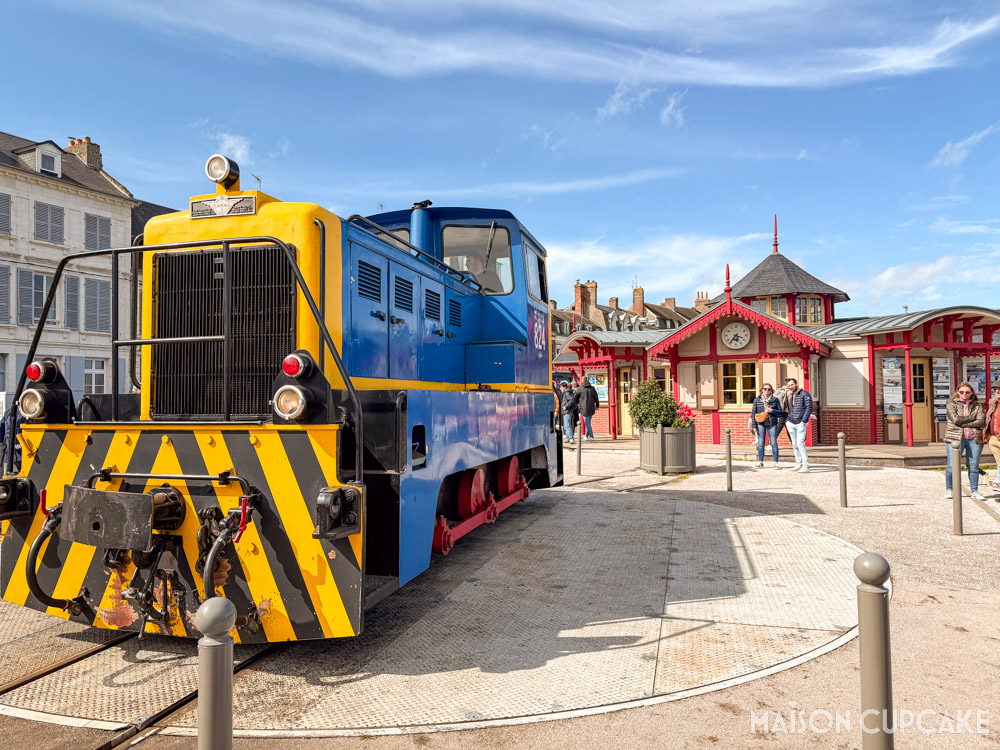
The day’s main activity was a journey on Chemin de Fer de la Baie de Somme, the local heritage railway that circles the bay to St Valery and in high season, beyond to Cayeux-sur-Mer.
Daily departures vary slightly but their website shows colour-coded timetables for the whole season. We hung out on the charming vintage station platform, eating our picnic before leaving.
The leisurely ride offers panoramic views of the landscape, set against a nostalgic railway soundscape of horn sounding and track-rattling, with cars tooting at road crossings. It’s great fun, whatever your age.
Things reach peak Thomas-the-Tank engine theatrics at Noyelles station, where two trains meet on parallel tracks and each of the locomotives switches ends. This is a necessity due to the track being split into three sections but creates an amusing interval during the trip as everyone plays along with the self-aware silliness. The end carriages offer a chance for passengers to stand behind the locomotive watching the driver at the controls.
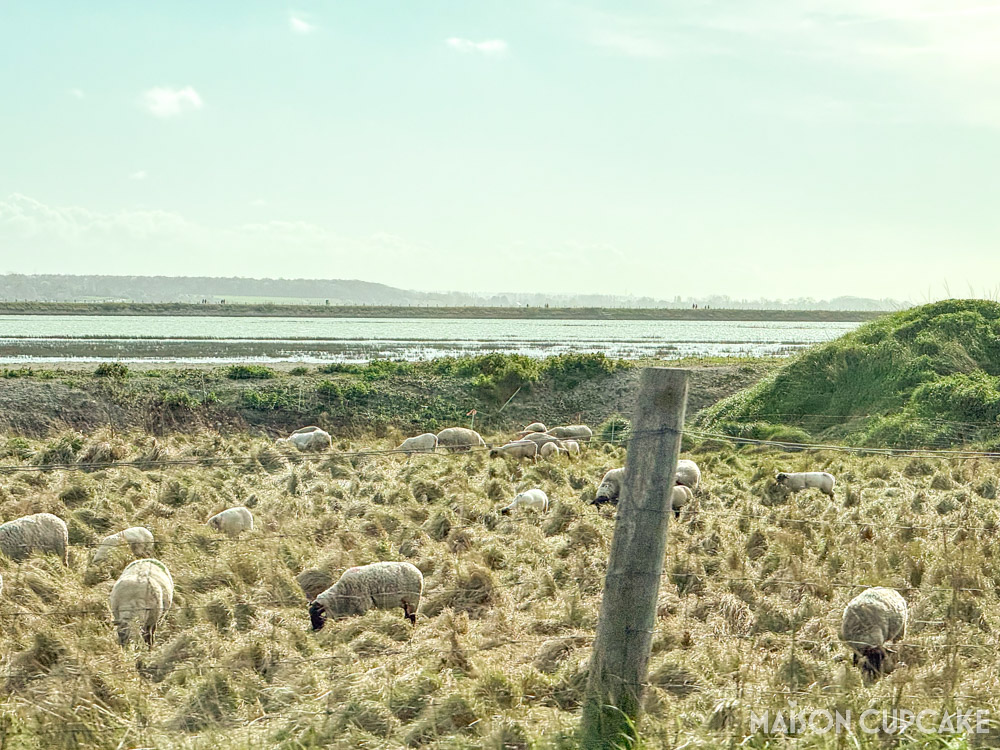
We saw plenty of wildlife. Pheasant flew up from the rails onto fields, we spotted a deer with a fawn, a heron amongst black headed gulls and cormorants. White cows lifted their heads as we passed, and flocks of sheep scuttled. As we circled the bay, points of interest changed throughout.
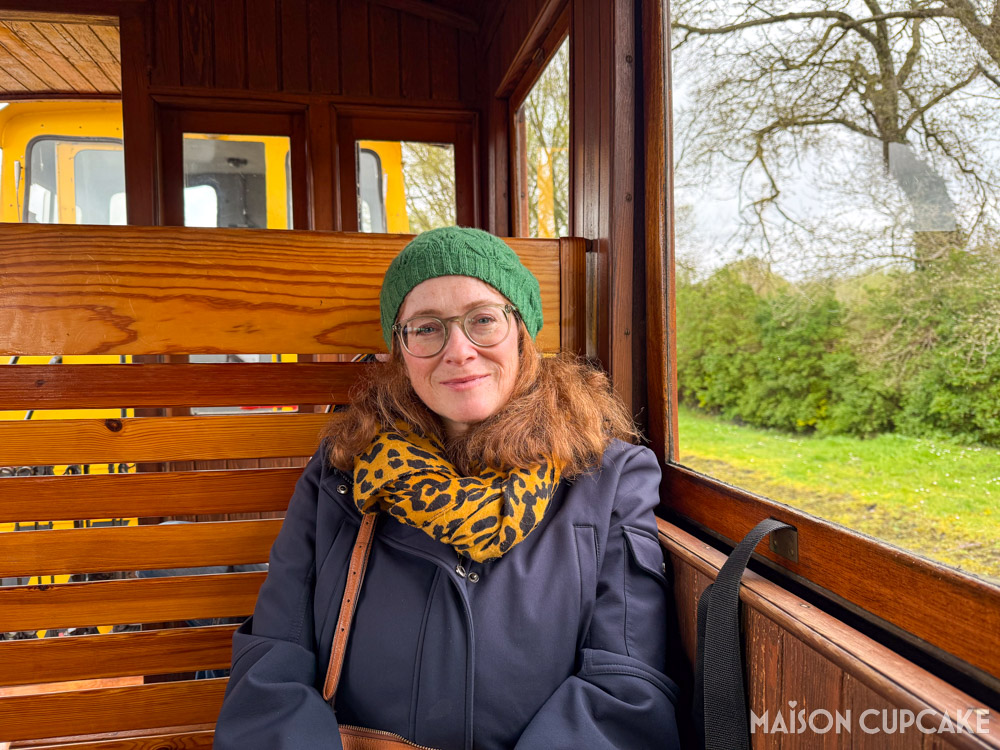
We rode two different types of train; a darker carriage with smaller windows pulled by a diesel engine, a slightly more comfortable version with vintage luggage racks and bigger windows pulled by steam. It was a smoother journey with the former but you got a better view with the latter.
I found the wooden seating pretty hard on the bum, although much of the time you end up standing and moving around. Although a shame not to be on a service to Cayeux, for me at least, one hour rattling to St Valery was long enough!
Two Hours in Saint-Valery-sur-Somme
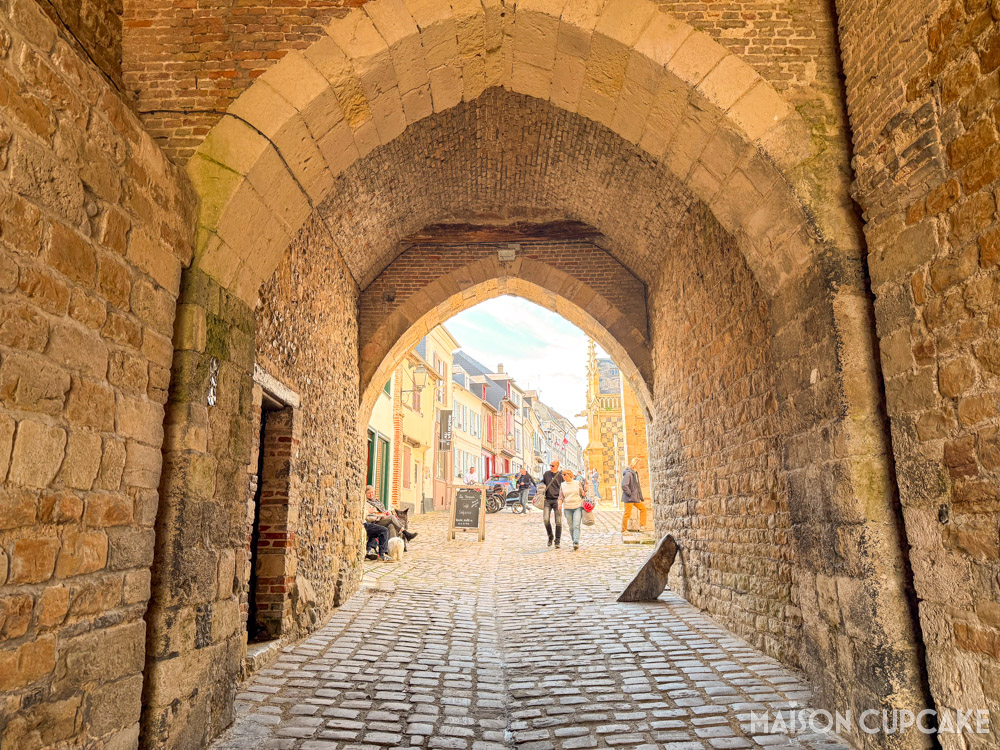
We had two hours in St Valery before returning to Le Crotoy; ample time to walk the mile to the medieval walled town and viewpoint over the bay.
St Valery, bigger than Le Crotoy, would make an equally good base, especially if you want more shops and restaurants nearby. We walked past the marina – the sun, now definitely out, enhanced the views of passing boats. We climbed to the medieval town, enjoying the sea air.
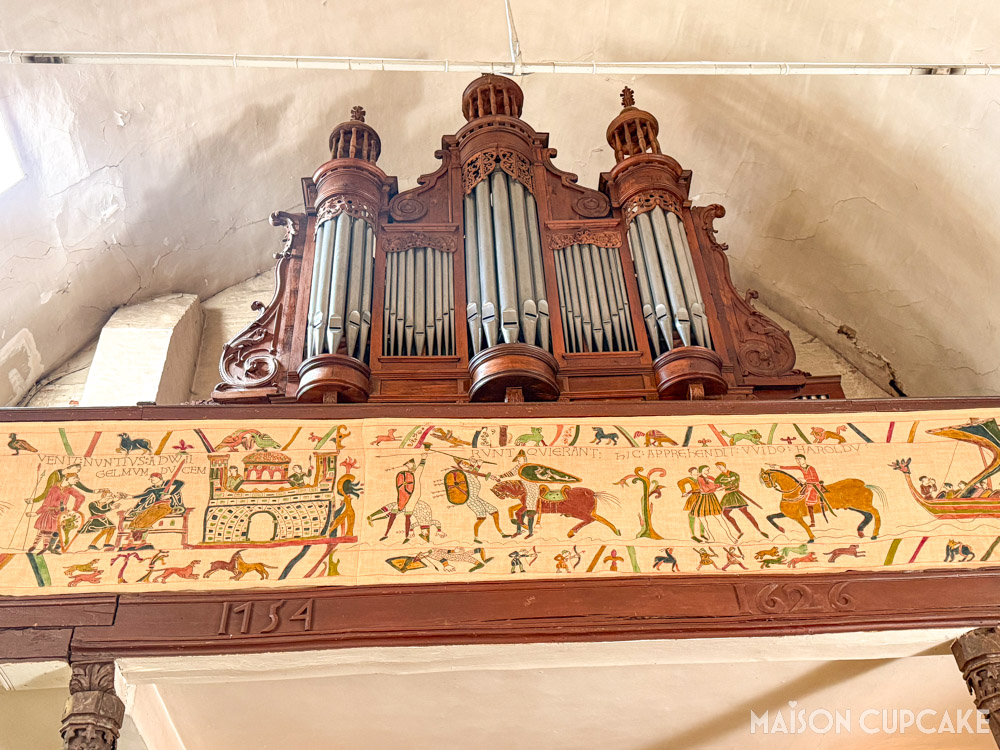
The medieval remparts have brick archway entrances and pretty streets – mostly residential with a few hotels. Église-Saint-Martin has a frieze of the Bayeux Tapestry, commemorating that William the Conqueror took shelter in St Valery before reaching Hastings in 1066. The town is twinned with Battle in Sussex.
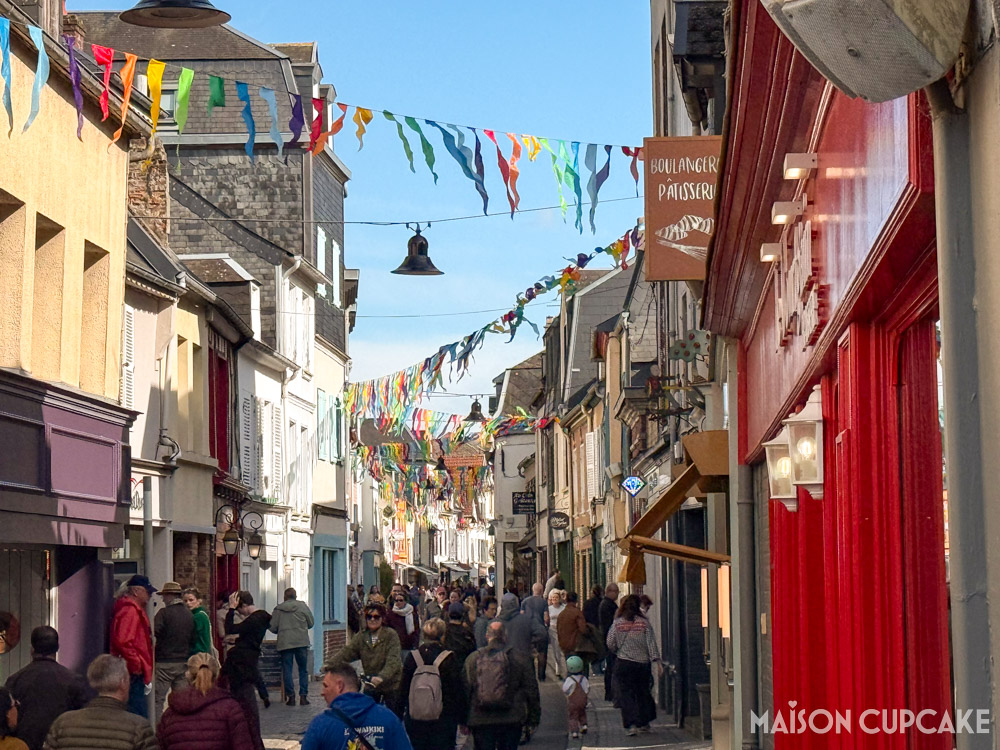
St Valery is also known for its floral displays with flower festivals in spring and summer. A rose garden close to the Porte Jeanne d’Arc had varieties named by Julia Child and Catherine Deneuve – these were not in bloom at Easter but hinted what you’d see in summer. The spring tulips filled flower beds on roundabouts and outside the church.
Walking back towards our train, Quai du Romerel runs parallel with the river Somme and has plenty of shops and half-timbered buildings decked with bunting. Musée Picarvie showcases local craft heritage and you could definitely spend longer in St Valery than the two hours we had.
Day 2: Le Tréport – Railway Age Resort
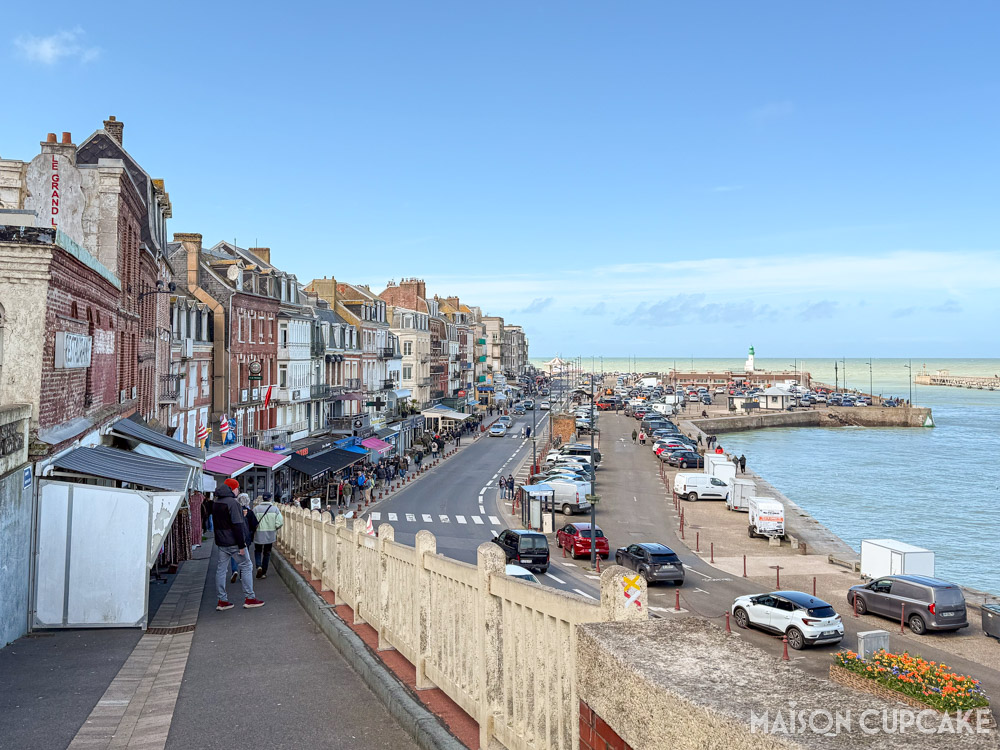
On Easter Sunday we drove to Le Tréport, 45 minutes away. Le Tréport was a resort built in the railway age, the SNCF station is across the estuary in Mer-les-Bains. The town is notable for its steep cliffs and funicular railway.
We parked twenty minutes away and walked to the seafront. Le Tréport is a larger fishing port than Le Crotoy, although originally built as a resort to attract wealthy holiday makers, the town today is distinctly un-gentrified.
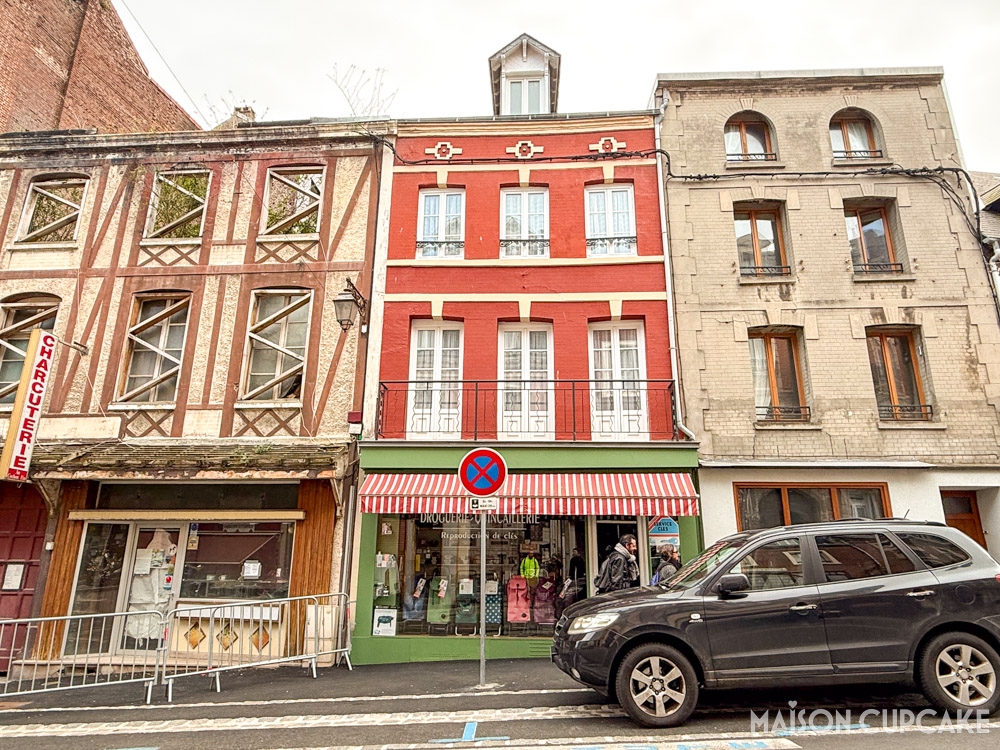
Most businesses were shut on our Easter Sunday visit – in any case, these are local utilities rather than gift boutiques. The old town is quaint rather than cute although there are decorative street signs in place of traditional French ones and the shopfronts often retain retro signage. Above, you might spot painted mouldings or religious icons looking back down.
L’Eglise-Saint-Jacques Le Tréport
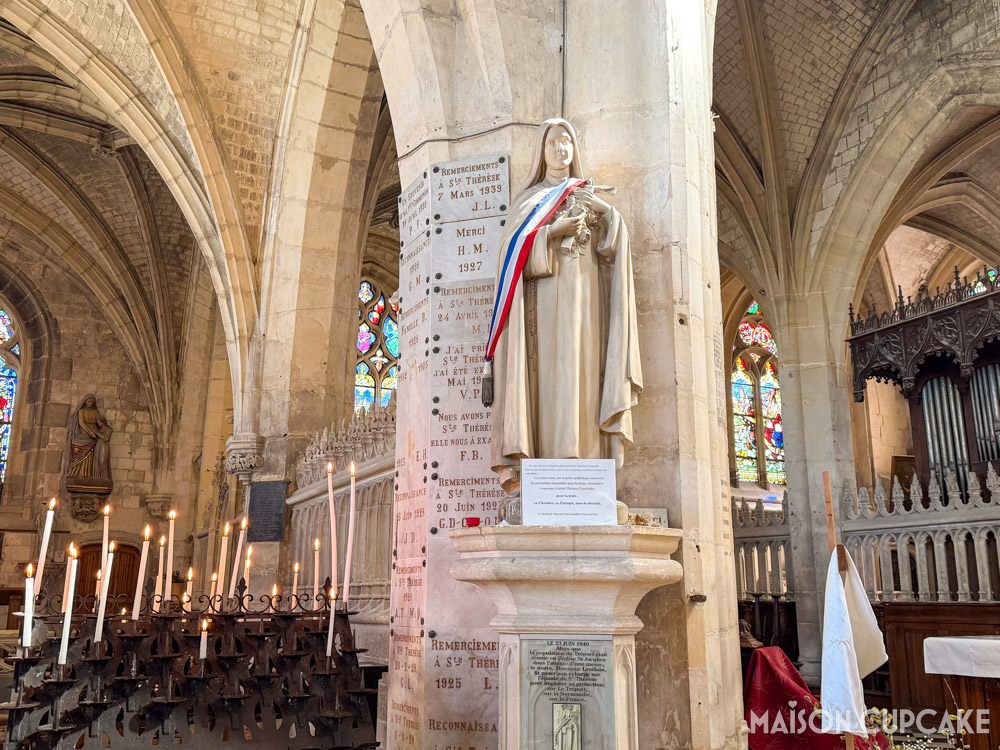
The Eglise-Saint-Jacques had features reflecting maritime heritage: a memorial adorned with fishing nets dedicated to lives lost at sea whilst local babies get baptised in a distinctive clam -shaped font. The church dates from the 12th century although rebuilt in the 16th.
A newer addition is a statue of Saint Theresa of Lisieux, who died in 1897 and is now second patron saint of France after Joan of Arc. Wearing a French tricolour fabric sash – a caption explained she has been the parish focus of prayers for peace in France since 1944, although this has recently been extended to peace in Ukraine and globally. The parish makes an annual pilgrimage to Lisieux in nearby Normandy.
Other landmarks were the turreted museum, housed in a 16th century prison, and the 18th century Hotel de Calais, where soldiers injured in the Battle of the Somme (First World War) recuperated.
Climbing The Cliffs At Le Tréport
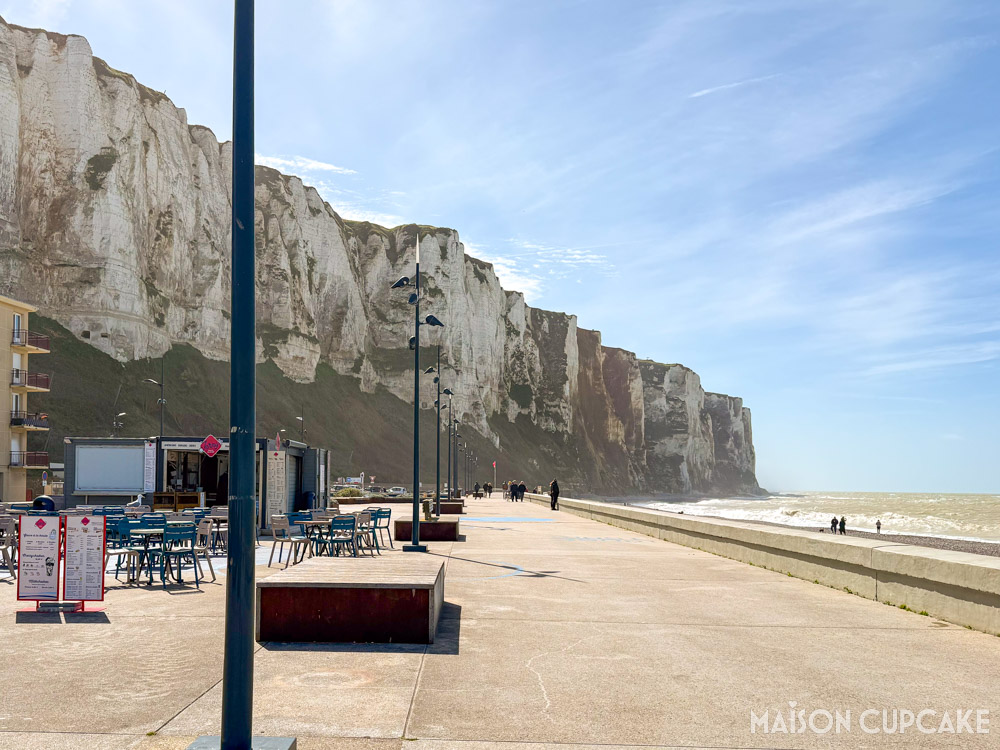
Sweeping cliffs are the natural feature of Le Tréport; you have two routes to the top; several hundred stairs or the funicular railway. We took our time climbing up, finding a bench to eat our baguettes halfway and a mix of heritage panels sharing poems and famous local landscape paintings to study whilst you recover your breath.
From the top there’s a view out to sea and over the estuary to Mer-les-Bains. A clifftop walking route spans several miles. We stopped for drinks at Les Falaises Qui Rougait (translation – the cliffs that make you red in the face), a smart grocery-cafe selling its own award winning gourmet fish pastes and spreads. It was the most stylish business we saw in Le Tréport and one worth buying gifts from.
Le Tréport Cliff Railway
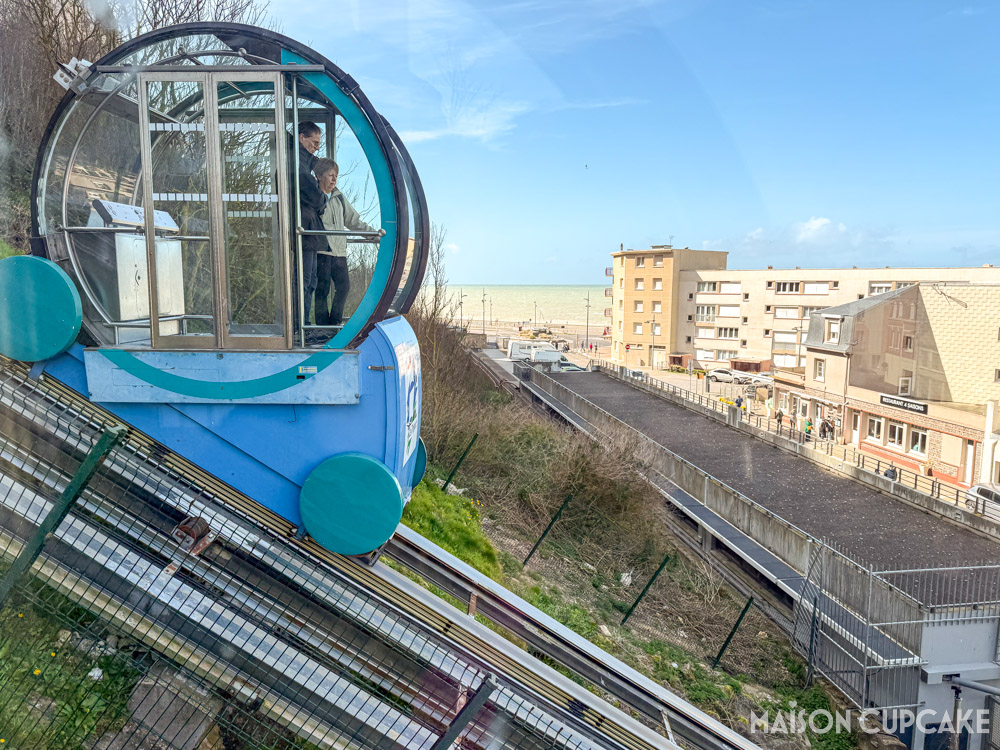
The funicular is free and a set of four lifts rather than a true cliff railway; the blue circular cabins are whimsical and it was fun to ride. We used it to get down again. At beach level, the cliffs look imposing and the waves crashed in windy conditions; the promenade offers several snack cabins and built-in beach huts with colourful front doors.
That you can park at the clifftop carpark for 3 euros all day, with an easy ride down to the town, makes Le Tréport very convenient. The cafes aren’t fancy, but often good value: we saw deals for crêpe and a coffee for under 5 euros and paid only 2 euros for our coffees. Deauville this is not.
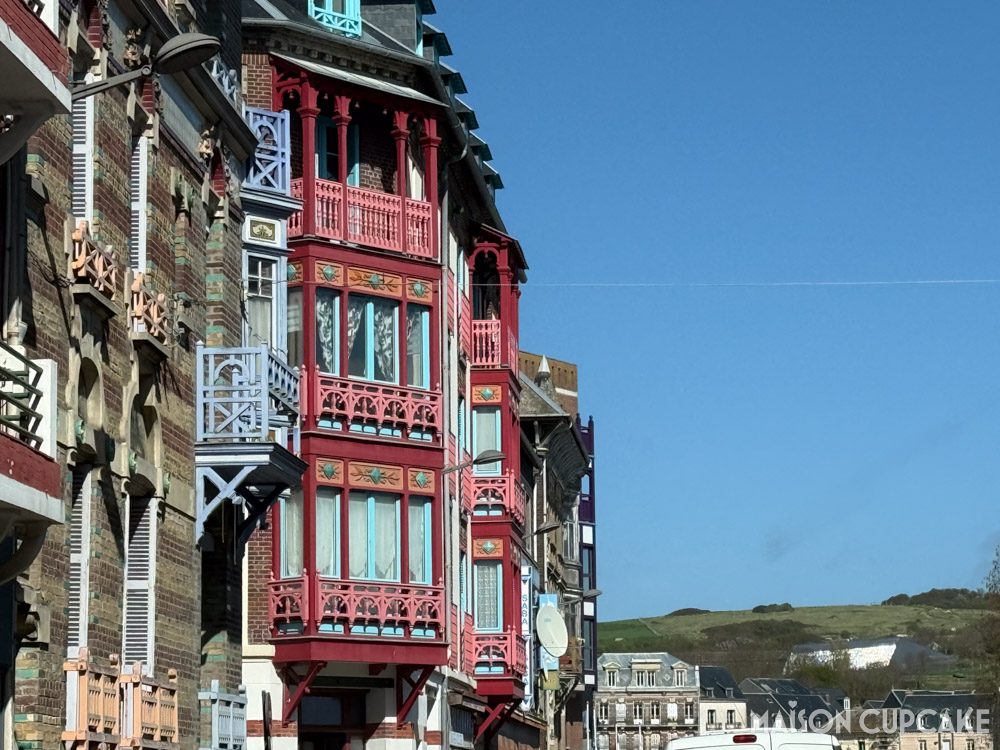
Afterwards, we had intended to visit bird hides in a reserve outside Cayeux-sur-Mer but being late in the day and windy, we abandoned that. Instead, I wish we’d stopped in Mer-les-Bains, where we glimpsed the stunning 19th-century Belle Époque villas from the car.
Day 3: Relaxing in Le Crotoy and Somme nature reserve
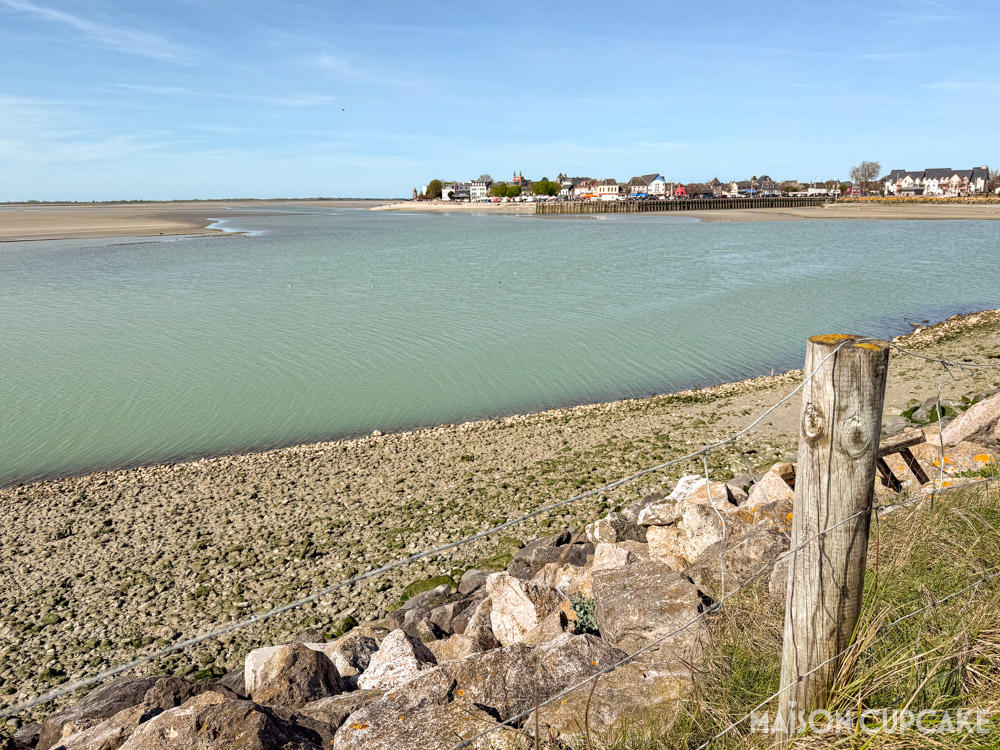
Wandering around town, numerous local history panels tell stories behind various locations. French sci-fi writer, Jules Verne, started writing 2,000 Leagues Under the Sea whilst living in Le Crotoy – his former house is now a holiday rental. Also, in 1430, Joan of Arc was kept prisoner in Le Crotoy before her death in nearby Rouen. Although the fortress was destroyed in the 17th century, Joan’s statue looks over the harbour in commemoration. Another memorial marks French resistance during World War Two.
Today was an opportunity to slow down and explore the local area on foot. We walked over to the locks spanning the Bassin de Chasse, where you hear a blend of birdsong and water rushing through the sluice gates; later that afternoon, my husband and son walked the periphery of the basin photographing birds. There are flat routes for easy bicycling although headwinds might be a struggle.
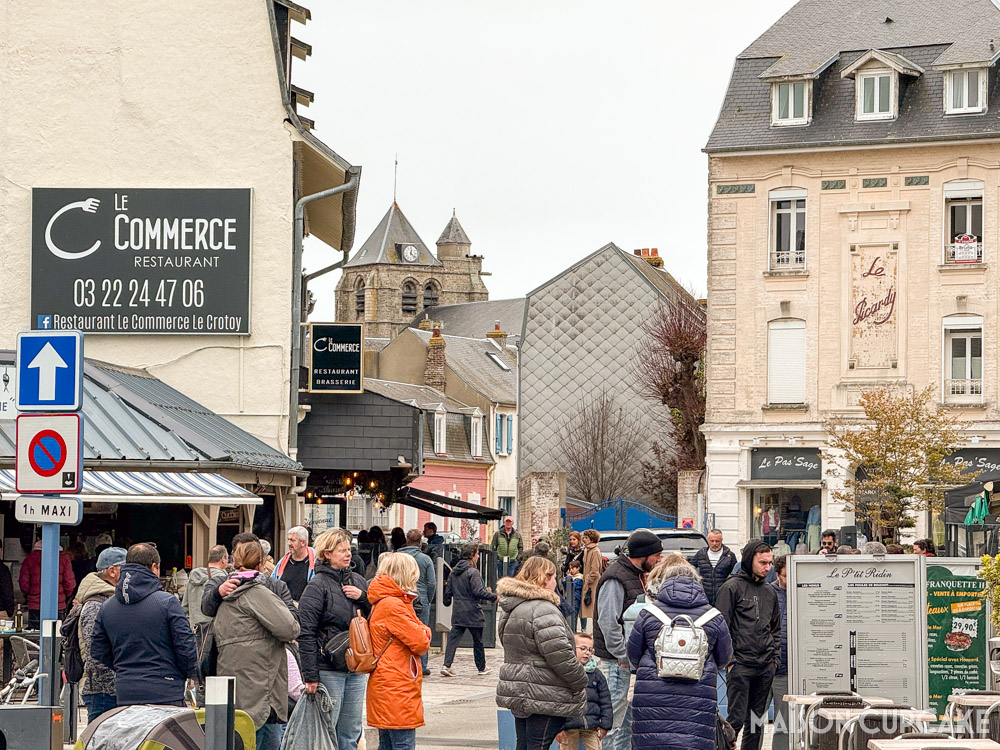
Le Crotoy welcomed waves of visitors during the day; there’s only one main shopping street, Rue de la Porte du Pont, plus the quayside but the large carpark devoted to camper vans had filled up even if local holiday apartment complexes seemed quiet. Visitors are overwhelmingly French.
Our Accommodation at Résidence de la Plage
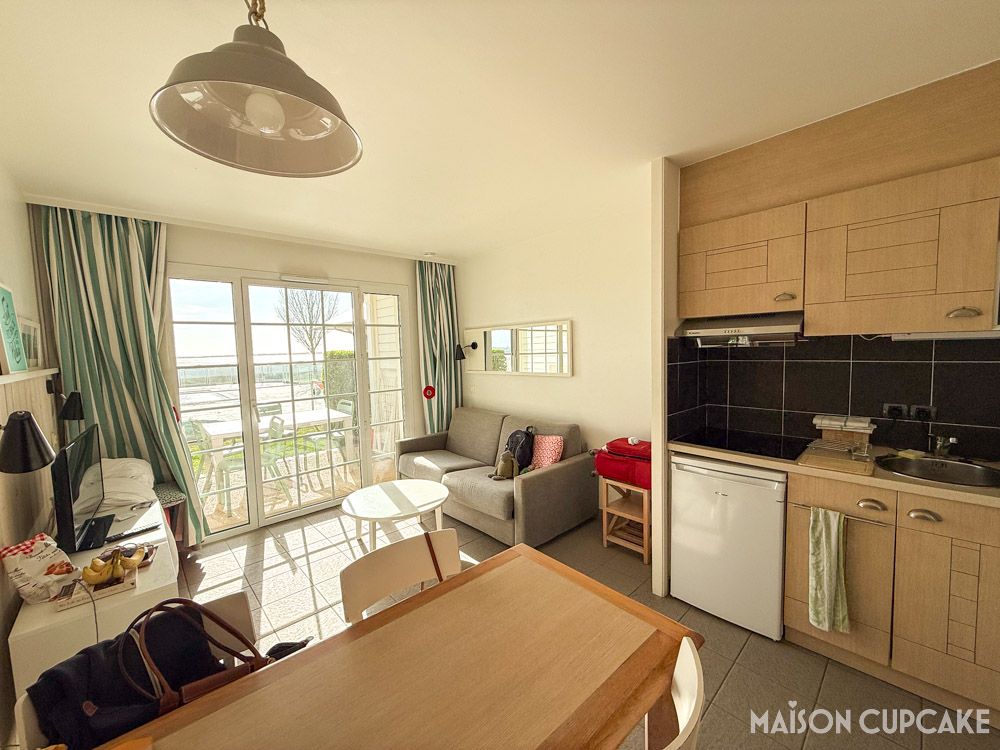
I spent the afternoon sitting on the terrace of our studio apartment at Résidence de la Plage, a Pierre et Vacances holiday rental. I chose the accommodation to be relaxing with a sea view; end-of-stay cleaning meant we didn’t need to rush to do this ourselves on departure. Had we arrived later, there was key-safe entry – another thing not to worry about.
The dishwasher meant no washing up, there was a proper bath rather than only a shower, chunky bathrobes were provided – I only wish I’d made use of the indoor swimming pool. The reception had a pleasant seating area, loans of board games and kids’ play area. There are two swimming pools, although we didn’t use these this time.
I’ve booked Pierre et Vacances apartments several times and like their flexible bookings, reasonable prices and find them more comfortable than caravans.
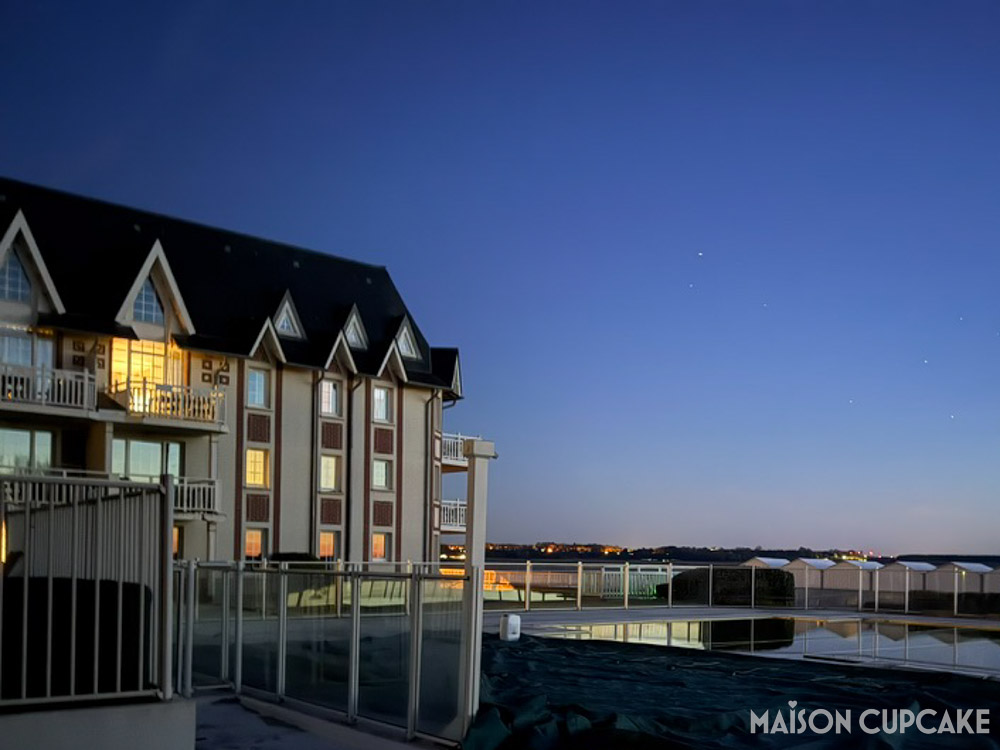
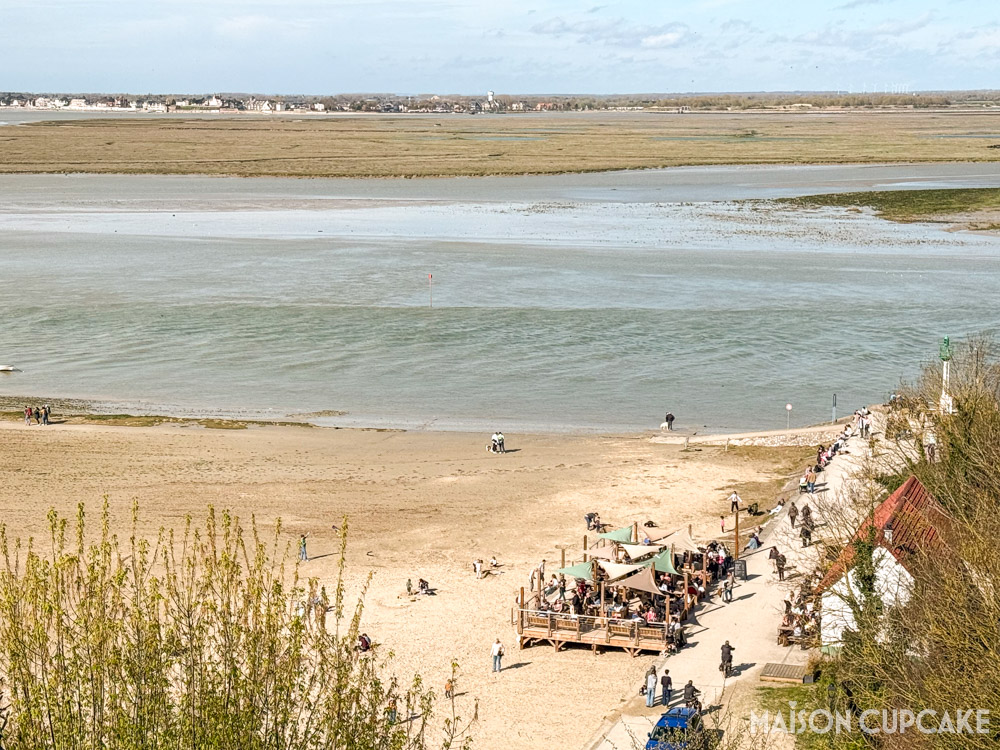
From our terrace I could see the outdoor pool – open July and August – and lines of white beach huts. On arrival, mist had covered the bay but when the sun shines and the tide is in, the bay gleamed. You’d get a better view of the water from upstairs accommodation but at ground level we benefited from a lawn area boxed off with hedging for privacy.
An underground carpark with designated numbered spaces per apartment made parking stress-free.
Shopping in Le Crotoy
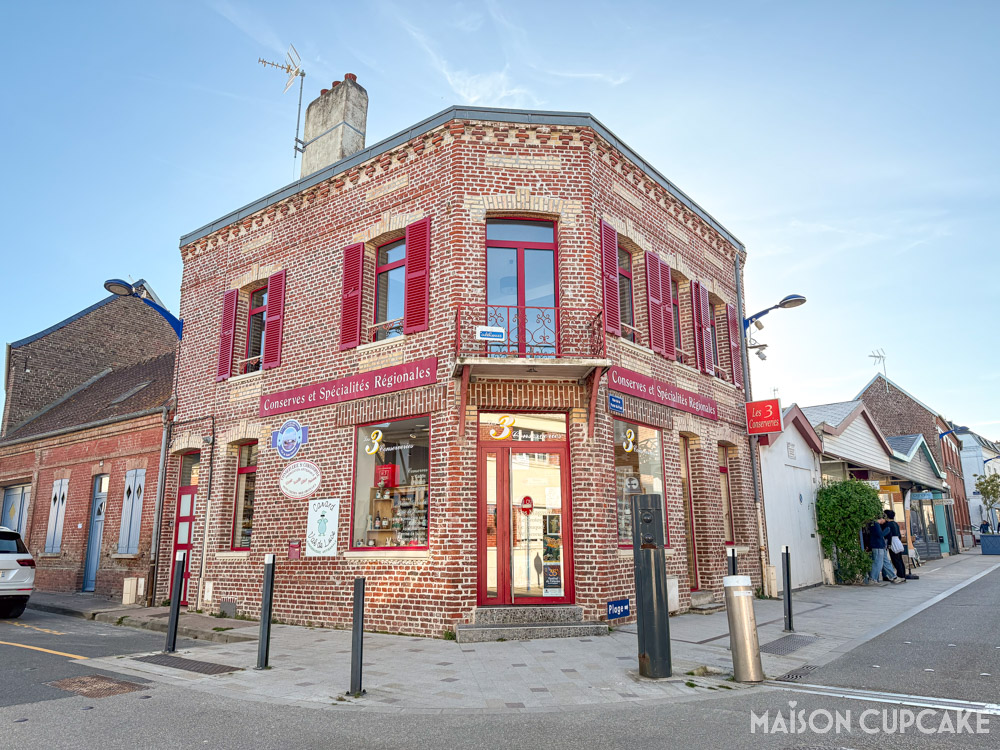
Although not a huge number of shops in Le Crotoy, Rue de la Porte du Pont, has enough to browse for gifts and food. There are several chic epiceries, a decent Maison de Presse for magazines and books, several souvenir shops and some bespoke chocolatiers.
Restaurants in Le Crotoy
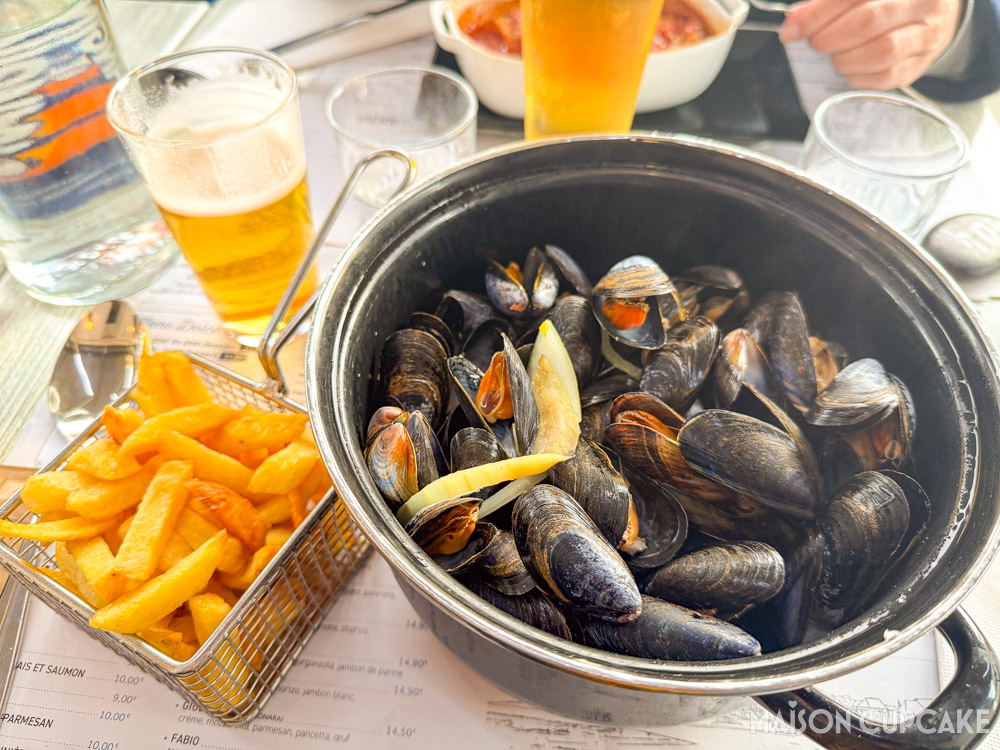
There are a solid dozen restaurants around Le Crotoy. Most of these are along Rue de la Porte du Pont and the quay. Booking is wise to get into smarter options like Le Bistrot de la Baie or Le Commerce, but if you’re not picky just arrive early and you’ll get a table somewhere.
Menus are unsurprisingly fishy: moules frites, often with creamy or cheesy sauces, skate wing or more British-style battered fish and chips. Local restaurants were unstuffy casual dining rather than gourmet presentation.
Our favourite meal was at Café Jules Verne on Place Jeanne d’Arc; the staff were friendly and the interior had Verne-appropriate prints of submarines and hot-air balloons. A meatier menu here, we ate burgers, steak and tried the local dish, Ficelle Picard, which is a rolled pancake, ham and mushroom smothered in cheese – delicious!
More Things To Do In The Somme Region
This region is so convenient by car from Calais that we will definitely return. Things to do in the Somme region next time are:
- Rent bikes and cycle along the many bike routes around the bay;
- Book a guided walk across the sandy bay at low tide;
- Take a boat trip to Pointe du Hourdel to see seals;
- Visit Parc du Marquenterre, a nature park with walking trails and café;
- Drive to Abbaye de Valloires, a beautiful abbey one hour away.
For a city-based weekend in northern France, take a look at my Rouen weekend itinerary or How to Spend Three Days in Lille.
Have you visited Baie de Somme? Share your tips below!


Leave a Reply